
Bricks CSS: Compatibility guidelines
Bricks aims to use CSS features that are broadly supported in modern browsers and avoid fallbacks that add weight for uncommon older browsers. We use Baseline as a practical reference when evaluating CSS support in Bricks output.
What is Baseline?
Section titled “What is Baseline?”Baseline is a compatibility model that tracks when web platform features become widely interoperable across all major browsers. It defines two key stages:
- Newly Available: Feature works across all major browsers (desktop and mobile).
- Widely Available: Reached ~30 months after “Newly Available”; safe to use in production for most users globally (~95% support).
Baseline considers support in the following browsers:
- Apple Safari (iOS)
- Apple Safari (macOS)
- Google Chrome (Android)
- Google Chrome (desktop)
- Microsoft Edge (desktop)
- Mozilla Firefox (Android)
- Mozilla Firefox (desktop)
Which CSS features does Bricks use?
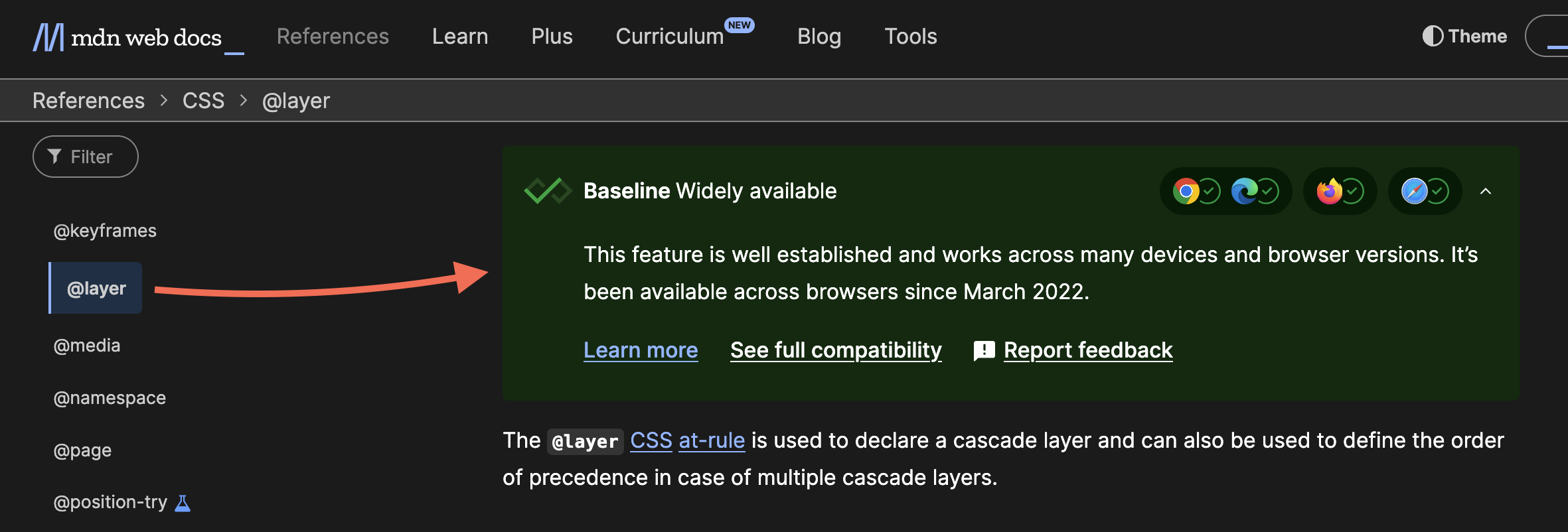
Section titled “Which CSS features does Bricks use?”Bricks output already includes modern CSS such as the :where pseudo-class and @layer CSS at-rule. Both are listed by MDN as Widely Available, which is the kind of broad support we look for before relying on a CSS feature in Bricks output.
What happens on much older or less common browsers?
Section titled “What happens on much older or less common browsers?”We aim to strike the right balance: adopting modern standards when they’re stable and broadly supported, while avoiding unnecessary technical debt or regressions for the majority of users. Adding fallbacks for edge-case devices below the Baseline threshold would compromise code quality and performance for everyone else.
Does this affect user-added CSS?
Section titled “Does this affect user-added CSS?”No. This only applies to the CSS generated by Bricks.
You can continue writing your own CSS however you like, including fallbacks or feature checks for legacy devices. Bricks just won’t include those fallbacks automatically in its own output.
Was this helpful?
A quick vote and short notes help us improve these docs faster.
Leave a note for us
Please do not include passwords, license keys, or personal data. We store submitted notes to improve the docs.
Thanks for sharing feedback. We're using it to improve these docs.